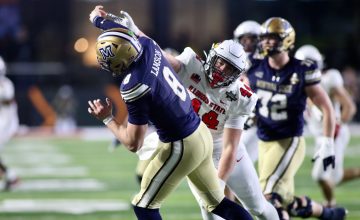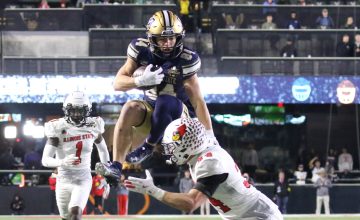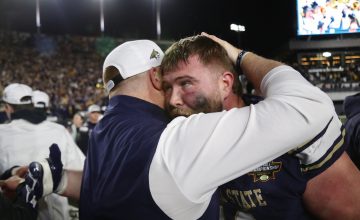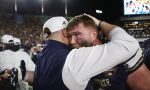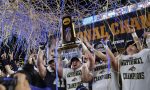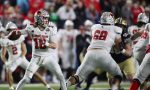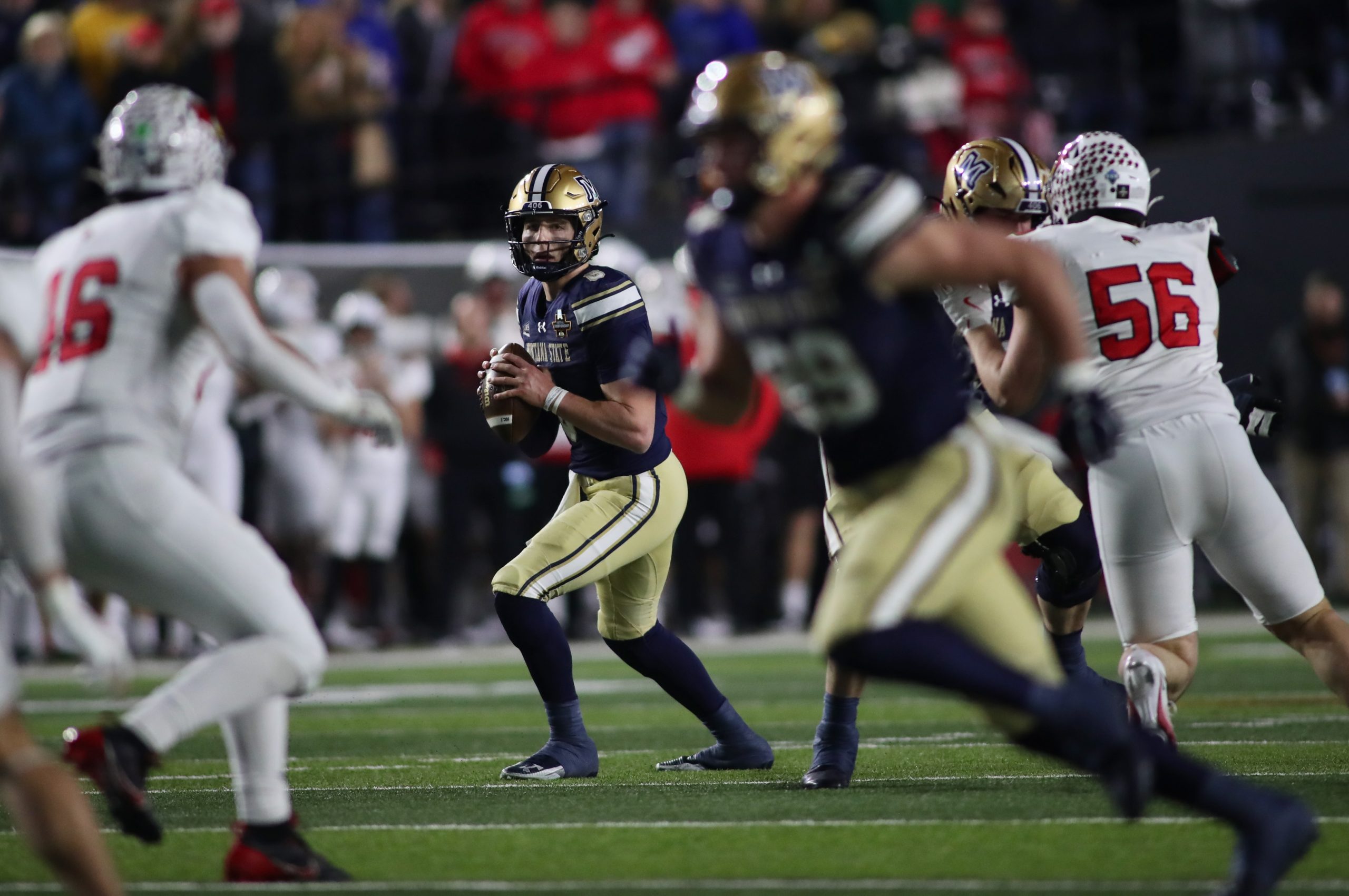
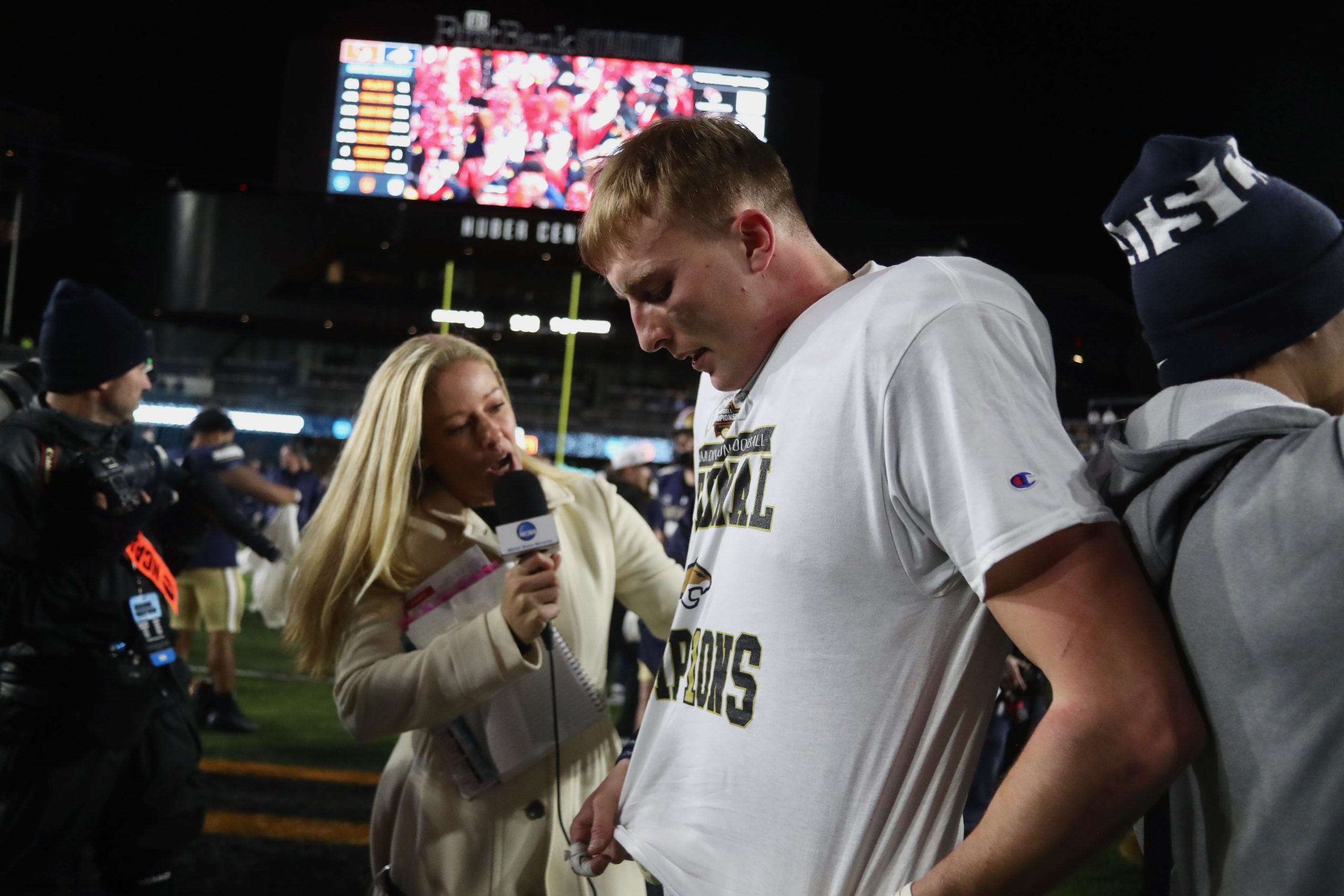
NASHVILLE, Tenn. – Cornered on the field by ESPN’s Stormy Buonantony immediately after Montana State’s wild 35-34 overtime win over Illinois State in the FCS national title game on Monday, Bobcats quarterback Justin Lamson struggled to put his thoughts in order.
“I don’t know…I never really…I always dreamt of being in this position, but now that I’m in it, I’m just trying to, like, take it all in. It doesn’t feel real, you know?”
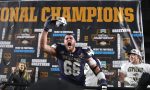
Ten minutes later at the trophy ceremony, with the championship Most Outstanding Player award cradled in his arms and his teammates and coaches arrayed on the stage behind him, Lamson had gotten over the shock.
“Look at all these people right here!” he crowed. “We’re bringing a national championship back to Bozeman where it belongs!”
And by the time he reached the postgame press conference another 30 minutes after that, Lamson was able to complete the thought, fully and eloquently describing his connection to his teammates, Bobcat history and the wider Bozeman community.
“It takes an army. It takes a lot of people behind us,” he reflected. “It’s not just the players. It’s the alumni. It’s the town. … It’s all these people that are coming together to support us. This hasn’t happened in 41 years, but I know people laid the foundation for us, and they continue to support us through those 41 years. And I’m just thankful that we were the group to bring it back to Bozeman.”
It’s not surprising that it took that long for Lamson to digest not only the stone-cold absolute classic he’d just played in, but also his unexpected new place in the pantheon of Montana State legends.
There have been numerous star Bobcat quarterbacks in the 41-year wait between their first national title and Monday night. That includes Lamson’s immediate predecessor, Tommy Mellott, whose career included two national-title appearances and a list of honors as long as one of his chain-lightning touchdown runs: All-American, Walter Payton Award winner, NFL Draft pick and plenty more besides.
But with his overtime touchdown throw to Taco Dowler (and Myles Sansted’s walkoff extra point), Lamson surpassed Mellott and everybody else. In just one season, the Stanford transfer attained the accolade that even Tommy Touchdown was never able to grasp: national champion.
And until and unless Montana State reaches the mountaintop once again, the most exclusive club in the inner circle of Greatest Bobcat QBs Ever contains just three members: Kelly Bradley, who quarterbacked the 1984 Montana State team to glory; Paul Dennehy, who guided MSU to the 1976 national title. And Justin Lamson.
(Montana State was NAIA when it tied in the Aluminum Bowl in 1956 to share the national title with freshman Dave Alt under center.)
“I think you always dream about winning a national championship, and I really do think that’s the standard at Montana State,” Lamson said. “We lost a lot of guys, and that was kind of all I heard about going into the season. I got here late, and these guys accepted me. Coach Vigen took a chance on me when not a lot of other people were pursuing me.
“I’m trying to just take it all in, but now I’m so thankful I got my chance at Montana State.”
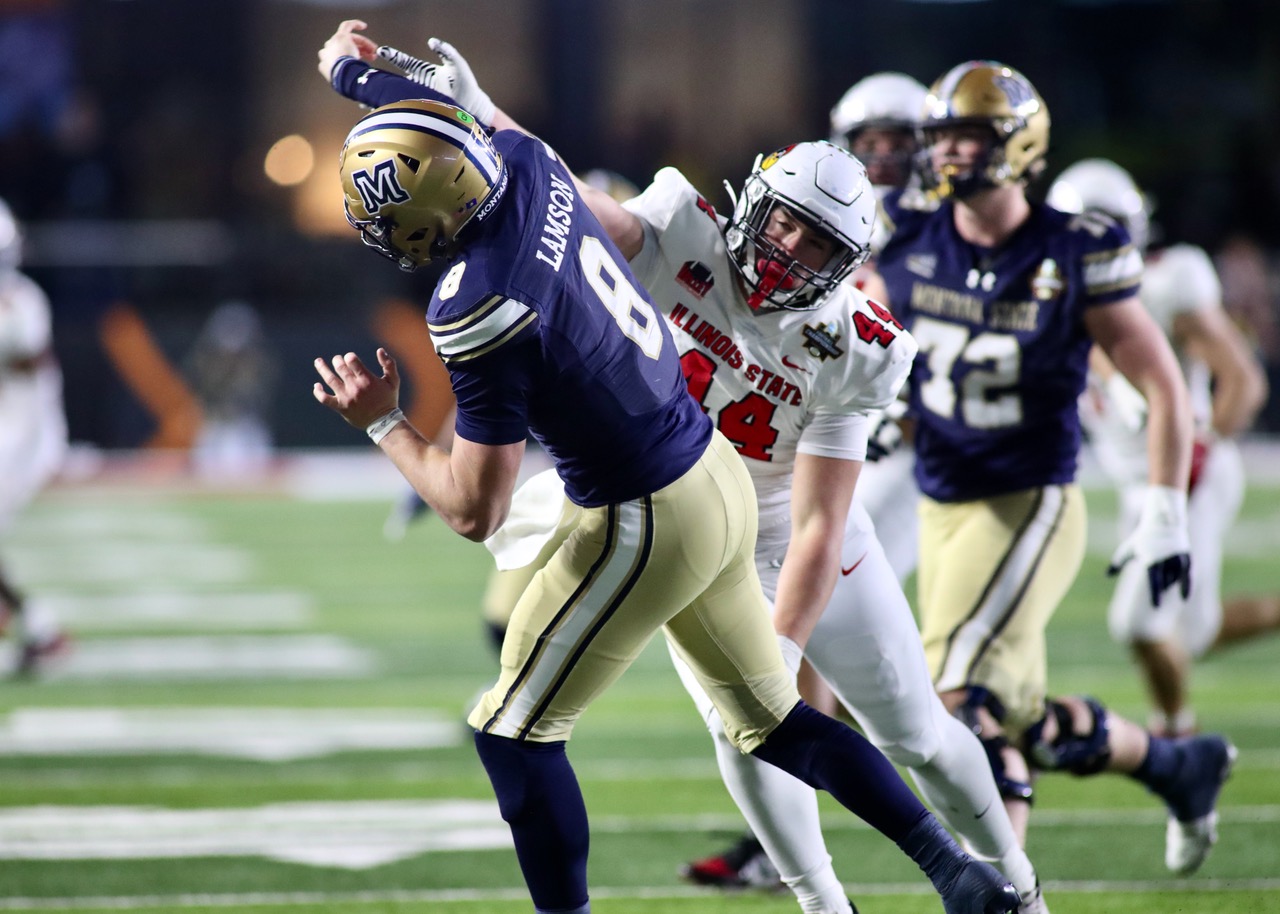
As his MOP trophy showed, Lamson had as much to do with the Bobcats’ triumph as anyone, even in a delirious game that featured killer penalties, highlight-reel touchdowns and not one but two game-saving blocked kicks.
Down 28-14, Illinois State kicked off a two-touchdown comeback by forcing the Bobcats to punt on the opening possession of the second half. By that point, the postgame headline was already coming into focus, even if it was still up to Lamson to determine which way it would tip:
“Brent Vigen Put the Game In His Quarterback’s Hands…And It Won/Cost Him A National Title.”
The Bobcats’ two 1,000-yard rushers, Adam Jones and Julius Davis, finished with just five carries apiece for a combined 69 yards.
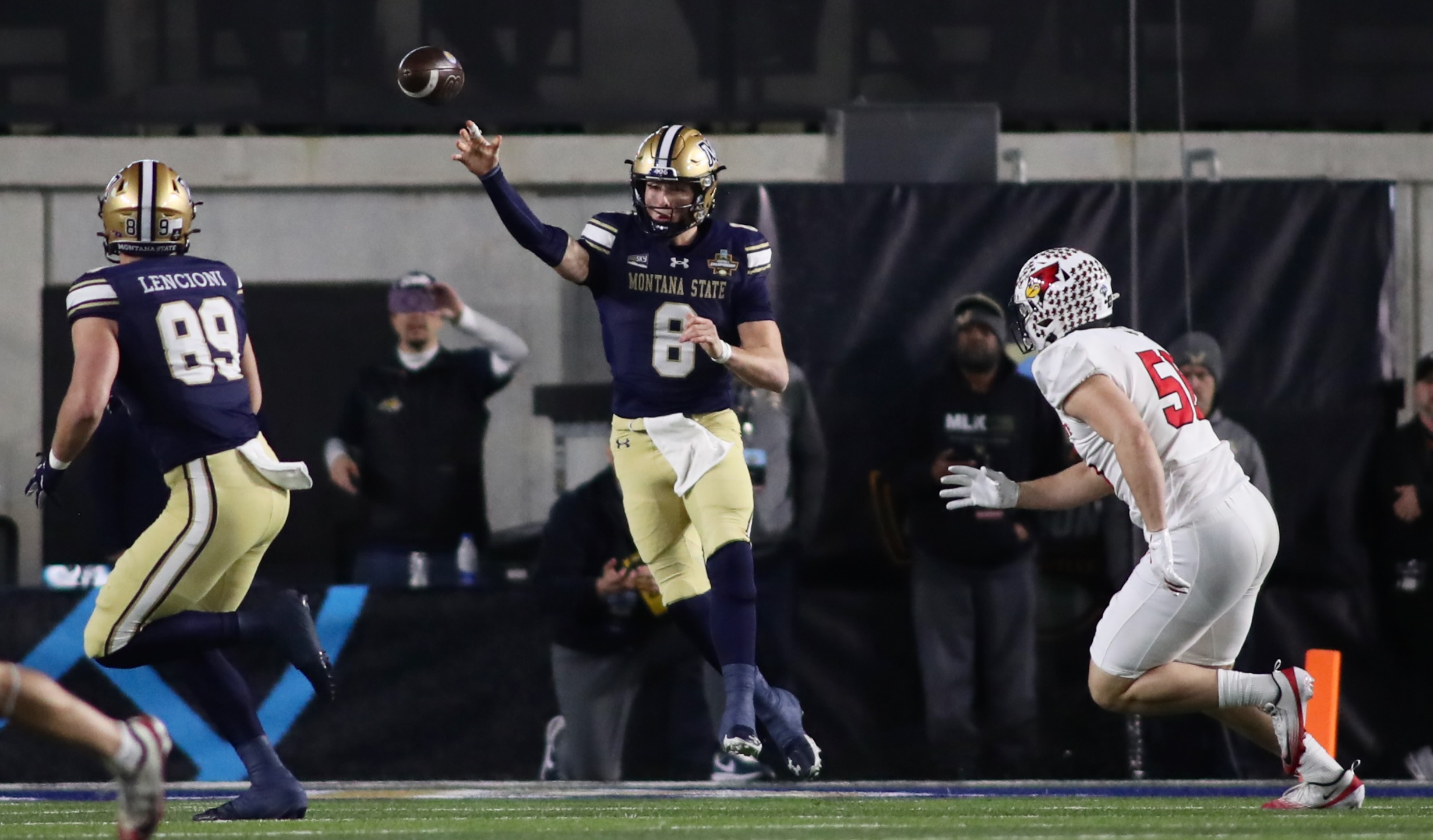
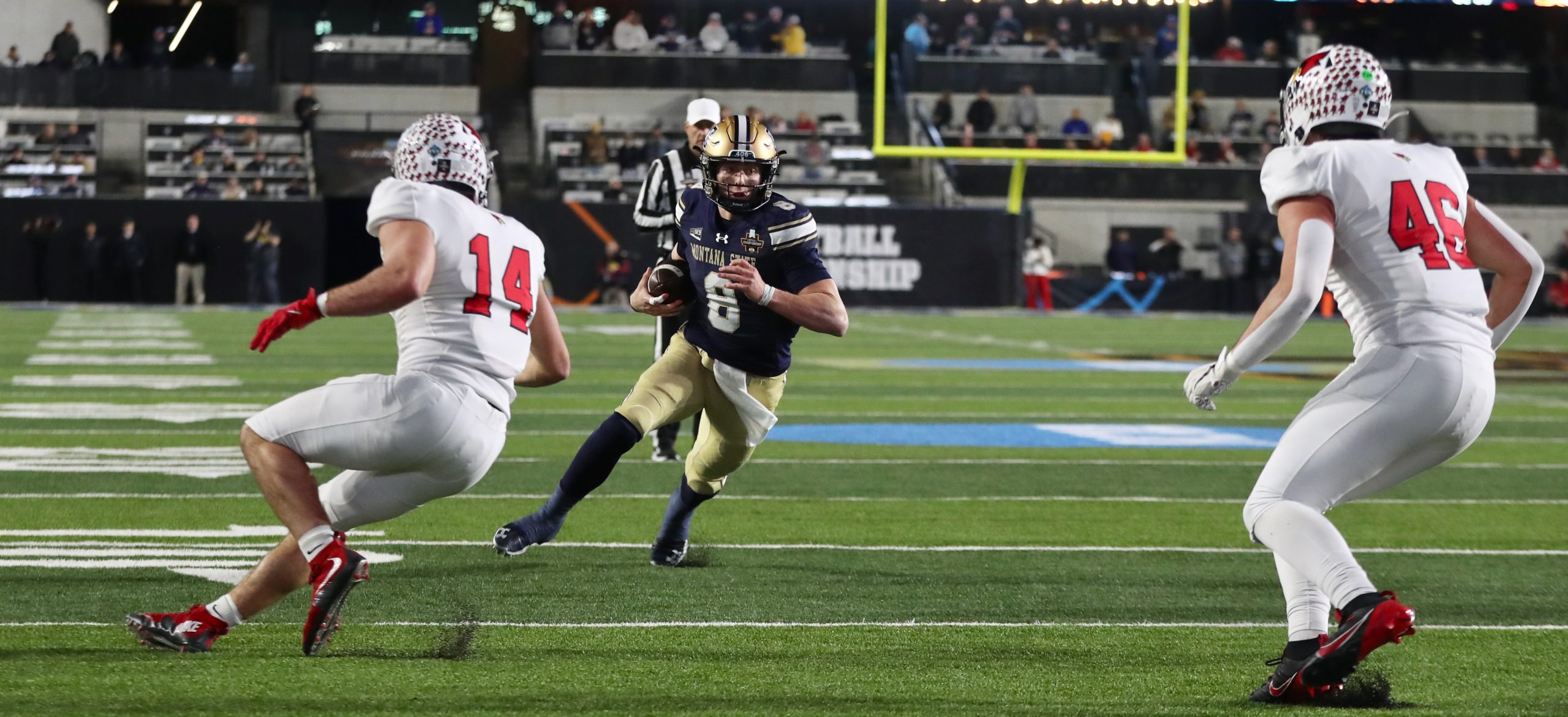
Lamson carried the ball 12 times himself, going for 30 yards and two touchdowns, and completed 18 of 27 passes for 280 yards and two more scores as Montana State, which had established itself for years as one of the best and most zealous power-running teams in the nation, completed its greatest triumph by running it just 24 times all game.
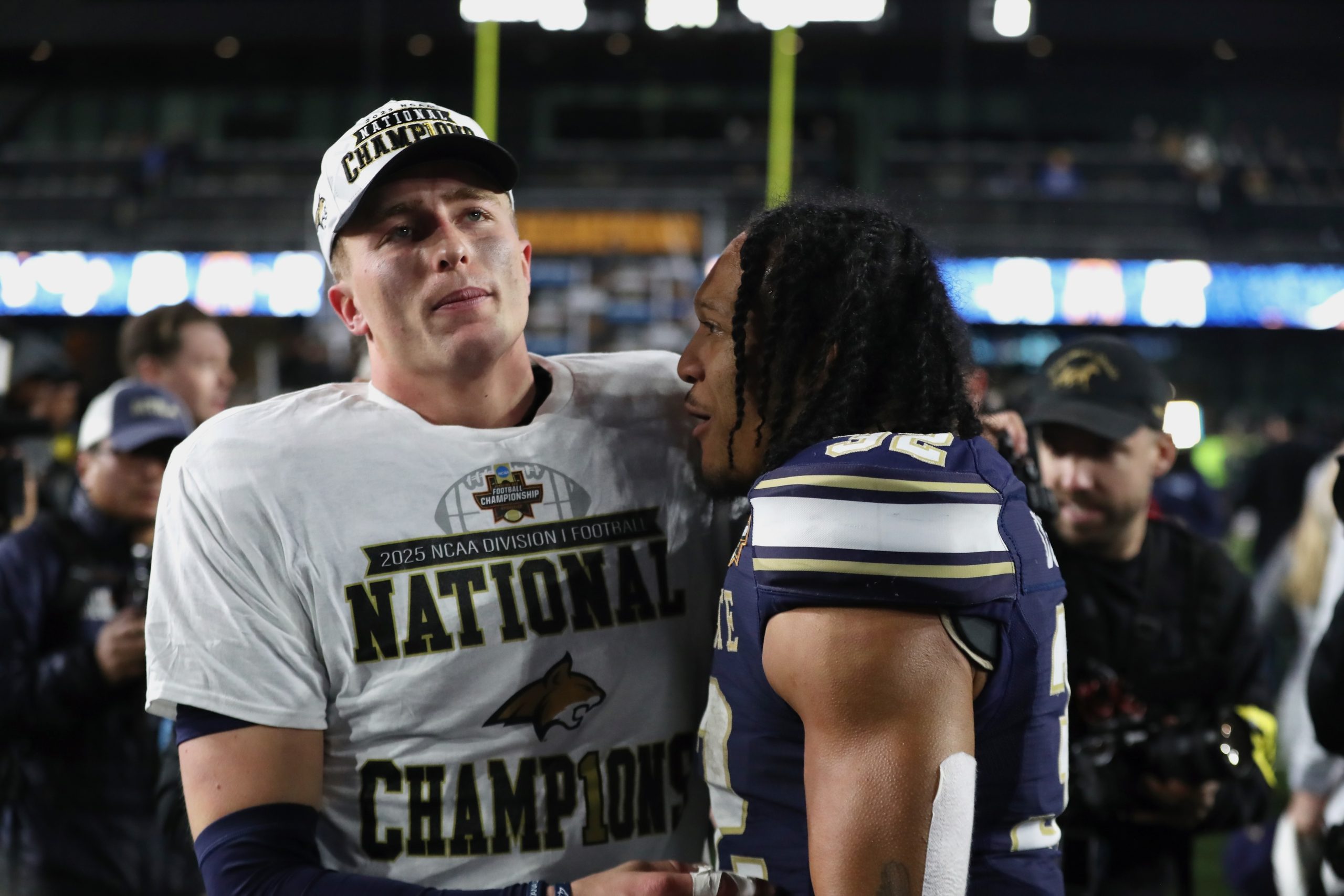
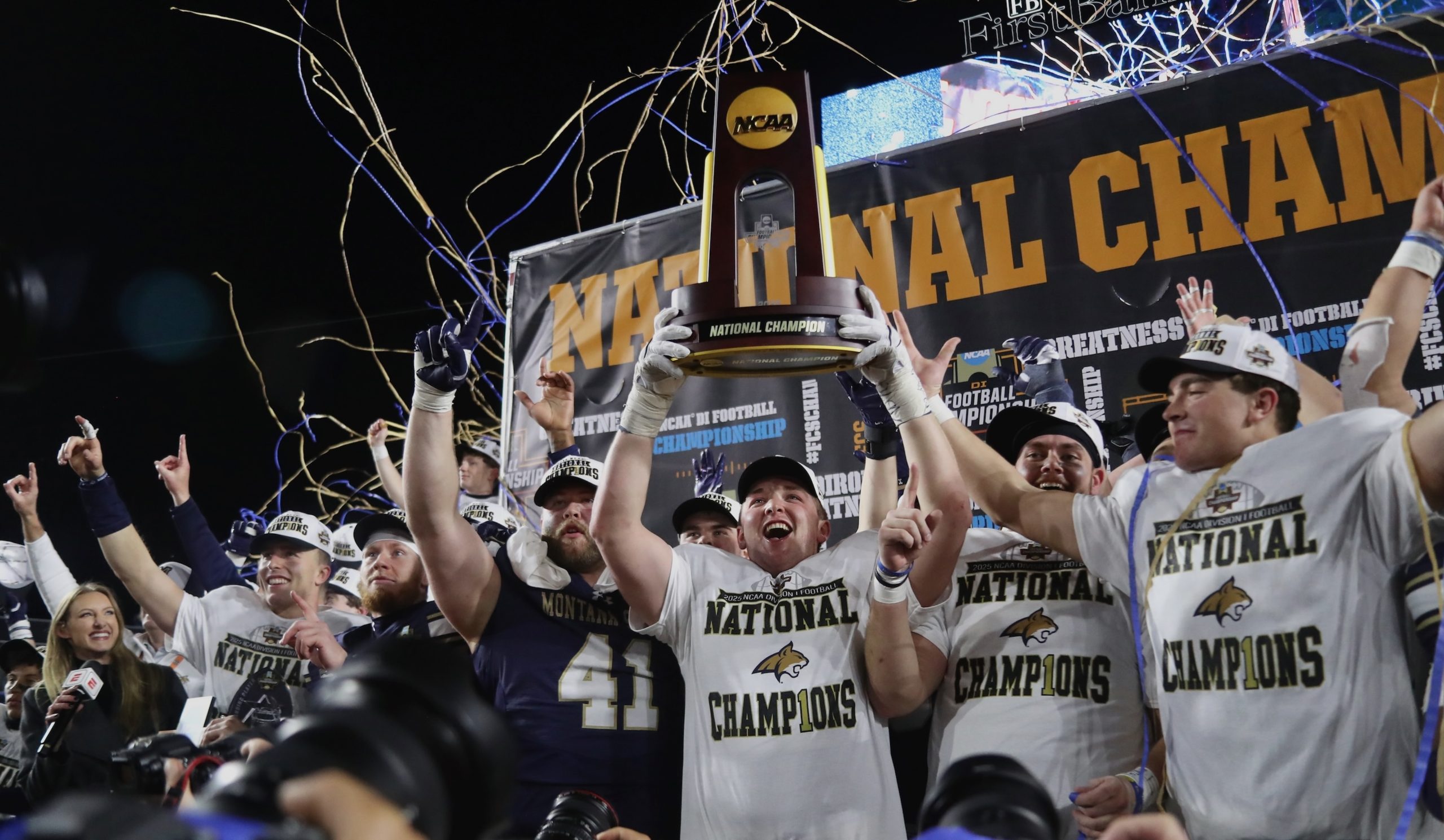
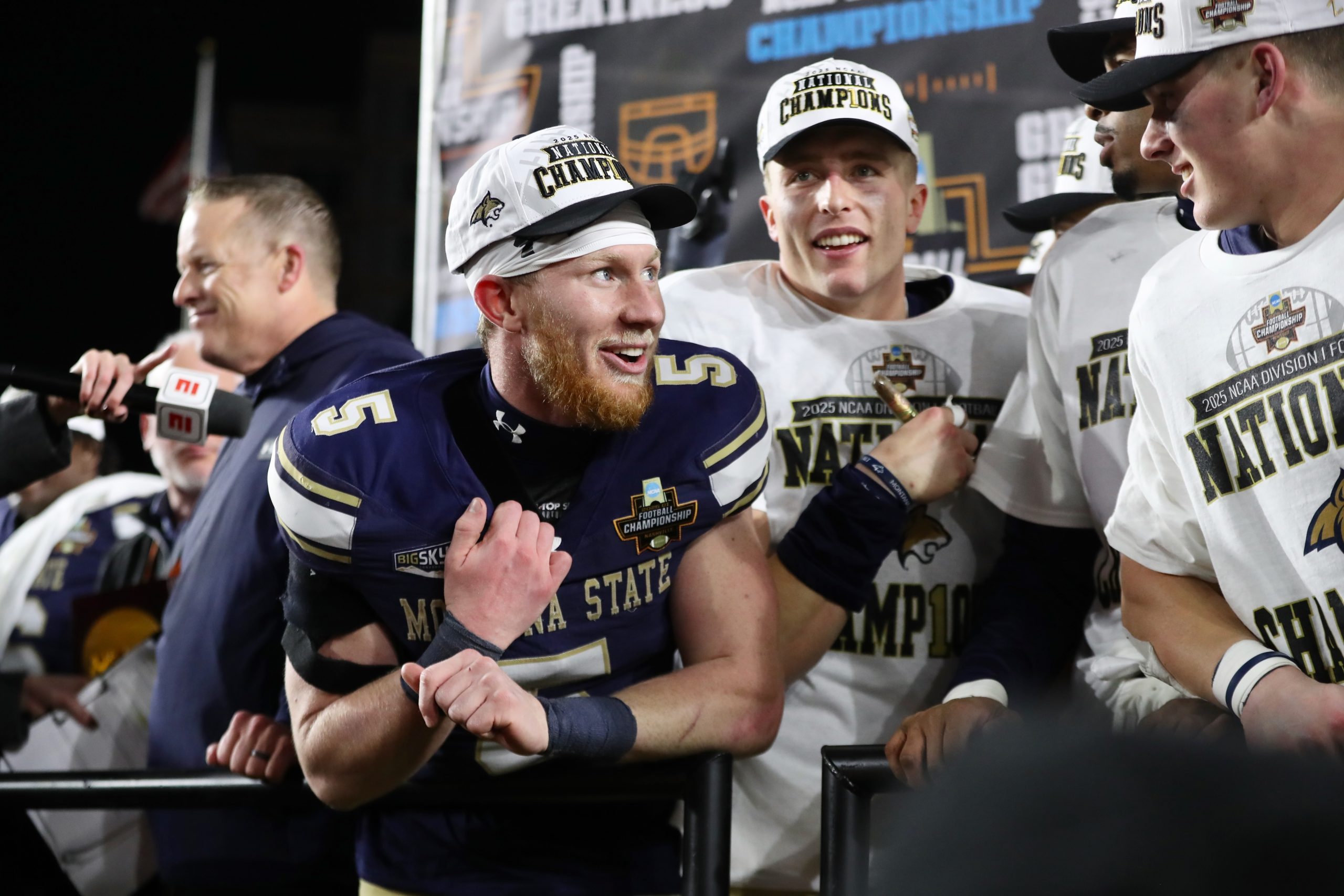
It was the end point of the vision Vigen had when he recruited Lamson from Stanford in the offseason. The former 3-star recruit from the Sacramento area started his career at Syracuse but didn’t see the field in two seasons as he dealt with injuries. After transferring to Stanford, he played in 24 games over two more years but started just four, attempting just 135 passes although he ran for 13 touchdowns in former Sac State head coach Troy Taylor’s two-quarterback system.
But to Vigen, who recruited Lamson out of high school when Vigen was the offensive coordinator at Wyoming, the dual-threat signalcaller was the perfect player to take over from Mellott and democratize MSU’s offense, at least a little bit.
Over the past four years, the benefits of the Bobcats’ heavy-running style had become apparent. So had its limitations, with two painful title-game losses and the constant worry of Mellott or Sean Chambers missing time with injuries.
“The way we played offense this year is an adjustment,” Vigen said. “We need to throw the ball. Rushing for 300 yards is a way to do it, but, you know, getting us over the hump needed a little bit more. You need to throw the ball.”
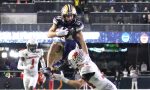
In the biggest game of the year, Vigen resolved to do just that. Time and time again, instead of pounding the rock with Jones and Davis, Lamson aired it out or kept it himself. On his first touchdown run, a 3-yard rollout to the right side, he trucked a Redbird defensive back three steps into the end zone, setting the tone for a stellar first half.
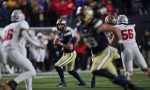
Lamson’s second touchdown run covered two yards up the middle and gave Montana State a 14-0 lead. And when Illinois State got on the board, Montana State’s savvy signal caller took over with 54 seconds left in the first half and completed three straight passes, the last a 33-yard touchdown to Dane Steel, to give the Bobcats a 21-7 lead at the break. His first two throws were two of his most impressive of the season.
Lamson completed 12 of his 13 throws in the first half, including six completions of 20 yards or more as the Bobcats looked to be cruising to the title.
“As you all saw in the first half, the quarterback is a really good athlete,” Illinois State head coach Brock Spack said. “We knew that coming in, and I was even more impressed to watch him live.”
It was enough to establish himself as the favorite for the MOP, even after a second half in which Spack’s Redbirds dialed up the pressure, made Lamson look uncomfortable and outscored the Bobcats 21-7 to send the game to overtime.
Montana State might not even have made it that far without a crucial field-goal block by Jhase McMillan with one minute to go in regulation.
But overtime brought the spotlight back to Lamson. After another blocked kick put the Bobcats in position to win with a touchdown, he faced fourth and 10 at the 14-yard line.
Illinois State crowded the line of scrimmage, dialing up a zero blitz that had worked for the Redbirds in crucial situations in the second half.
This time, Lamson had the answer. Dowler ran away from his defender. With a blitzer in his face, Lamson floated the ball to the front left corner of the end zone, landing it perfectly in Dowler’s hands.
“Players win championships,” Vigen said. “And we have a bunch of guys that can play this game, and the challenge as a coach is to continue to find ways to put them in that position. … That was the piece we were looking for, Justin Lamson and Taco Dowler. In those moments, as a coach, you’re trusting your players. Allowing them to go make plays is really what this is all about.
“And yeah, it’s pretty dang fitting that it was those two making that connection.”
A legendary throw…for Montana State’s newest legendary quarterback.
“Taco was wide open,” Lamson said. “I got hit, so I just kind of gave him a chance. And, you know, the rest is history.”